Abstract
Traffic congestion in developing countries has emerged as a critical public health crisis, significantly impeding emergency medical response and directly contributing to preventable mortality rates. Traditional ambulance services can experience severe delays when navigating congested urban environments, increasing the risk of deterioration for patients requiring immediate medical attention.
This research proposes a novel IoT-enabled drone-integrated healthcare system designed to collaborate with emergency medical services and optimize ambulance response times. The system combines UAV-based aerial surveillance, IoT connectivity, intelligent traffic management, and real-time route optimization to improve emergency response in high-congestion environments.
- The proposed system uses drones to continuously monitor traffic conditions and provide real-time aerial information that can support emergency route planning before and during ambulance deployment.
- IoT-enabled communication allows drones, ambulances, traffic-management infrastructure, and healthcare systems to exchange information in real time, creating a coordinated emergency-response ecosystem.
- Preliminary modeling demonstrates a potential 30–50% reduction in ambulance response time compared with conventional emergency-response systems, providing the potential to improve survival rates and patient outcomes during critical medical emergencies.
The proposed framework focuses particularly on developing countries where rapid urbanization, traffic congestion, and limited emergency infrastructure can create significant barriers to timely medical care.
Problem Statement
Emergency medical services depend heavily on the ability of ambulances to reach patients quickly. However, in densely populated cities, traffic congestion can significantly increase travel time. Conventional navigation systems generally depend on static or limited traffic information and may not provide sufficient situational awareness for rapidly changing emergency conditions.
This creates a critical gap between the time an emergency is reported and the time medical assistance reaches the patient. In severe medical conditions, even small delays can influence patient survival and recovery outcomes.
The proposed solution addresses this challenge by integrating drones, IoT devices, intelligent traffic management, and emergency healthcare systems into a coordinated architecture.
Proposed Drone-Enabled IoT Healthcare Framework
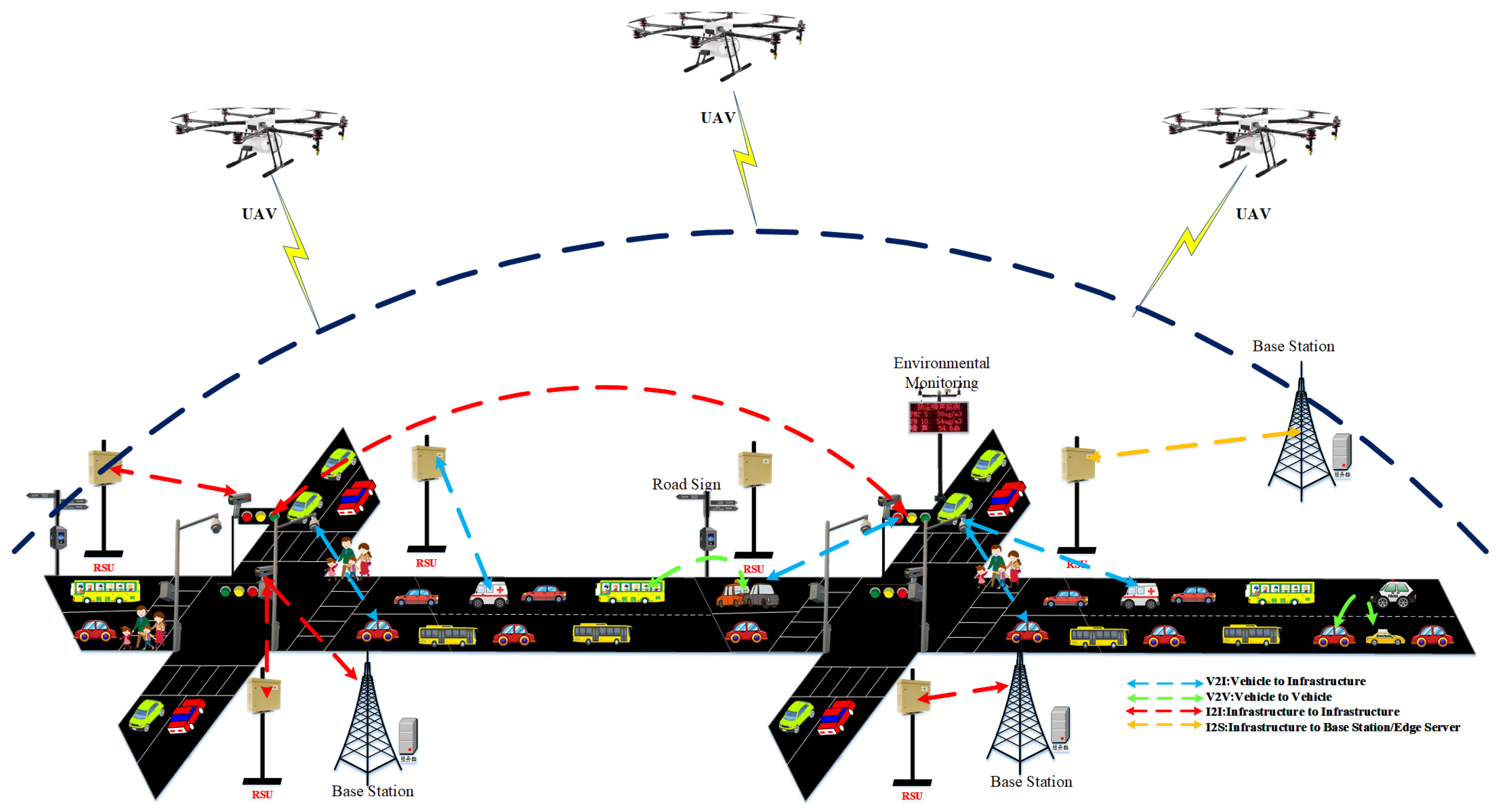
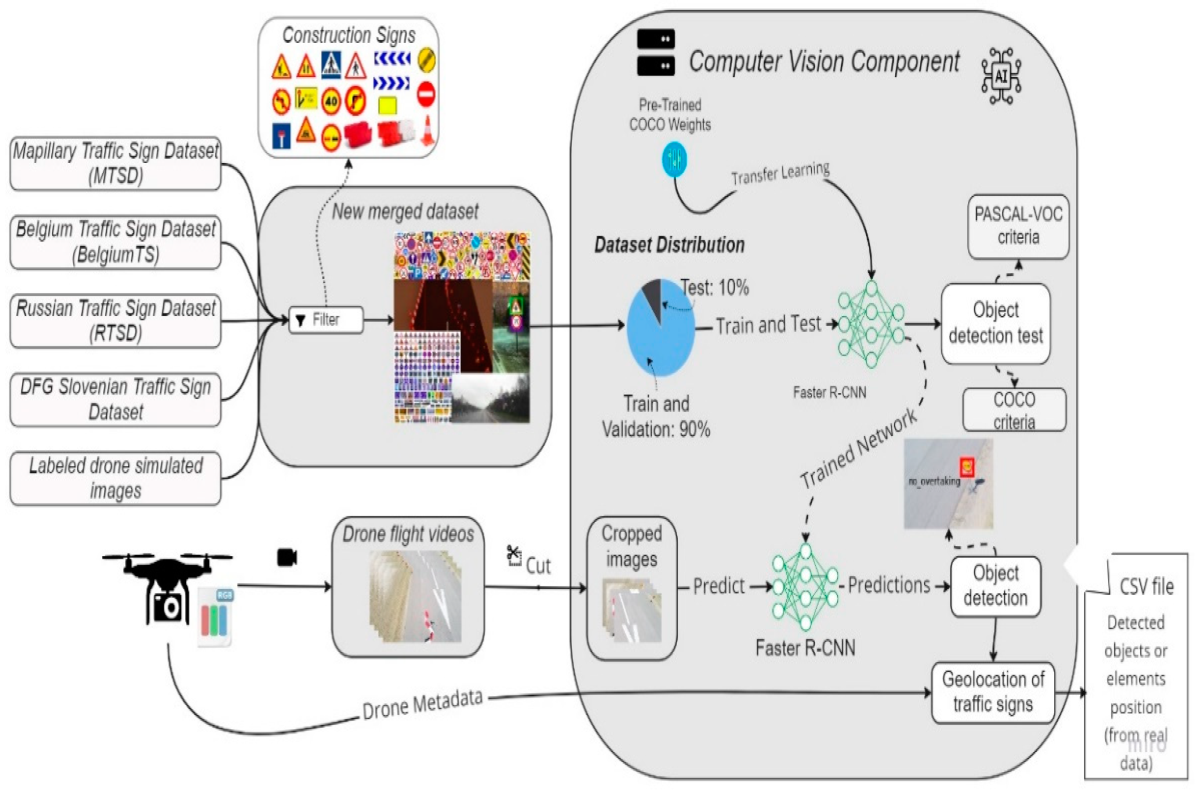
The proposed framework establishes communication between UAVs, ambulances, traffic infrastructure, healthcare facilities, and IoT-enabled monitoring systems.
- Preventive Route Planning: Continuous aerial surveillance is used to identify traffic conditions and determine potentially optimal ambulance routes before emergency dispatch.
- Active Traffic Clearance: Multiple UAVs can provide real-time traffic information and support emergency corridor creation by identifying congestion and communicating route requirements.
- Emergency Intervention: When an ambulance encounters unexpected congestion during a critical mission, the drone network can provide updated traffic information and identify alternative routes.
- IoT-Based Communication: Connected devices continuously exchange operational information between emergency vehicles, drones, healthcare facilities, and intelligent transportation infrastructure.
Intelligent Traffic Management and Real-Time Route Optimization
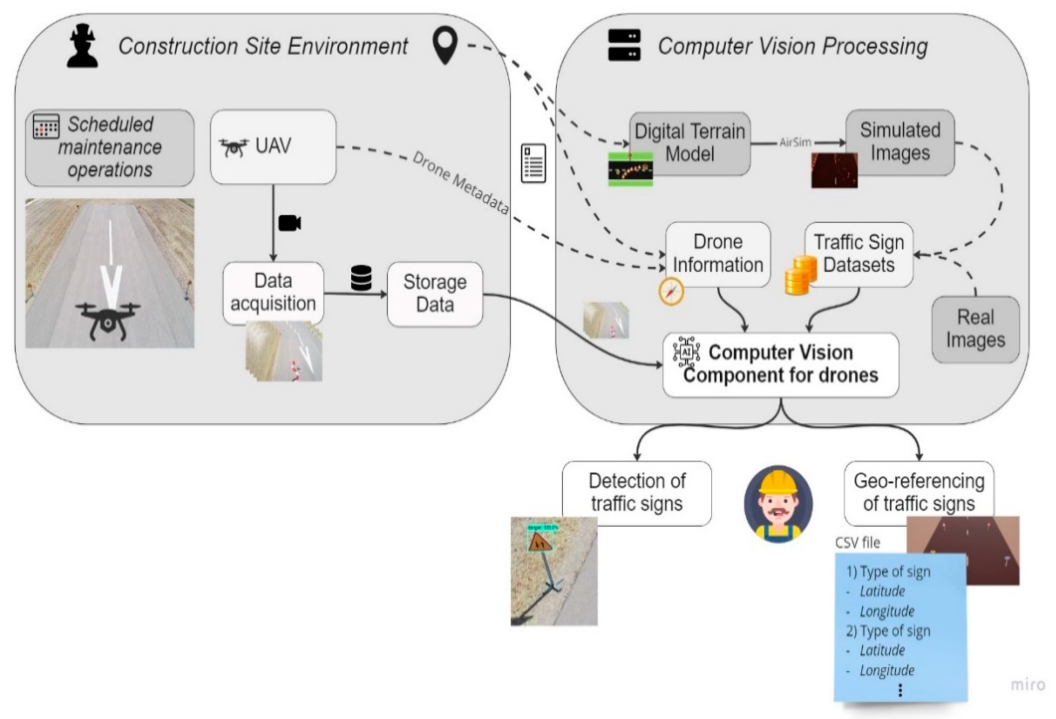
A major component of the proposed system is intelligent traffic management. Drones provide an elevated perspective that can complement conventional roadside sensors and navigation services.
Real-time aerial information can be processed to identify congestion, blocked roads, accidents, and possible emergency corridors. This information can then be transmitted to ambulances to dynamically update their routes.
The combination of aerial surveillance and IoT connectivity enables emergency-response systems to react to rapidly changing road conditions rather than relying exclusively on previously collected traffic information.
Emergency Corridor Creation
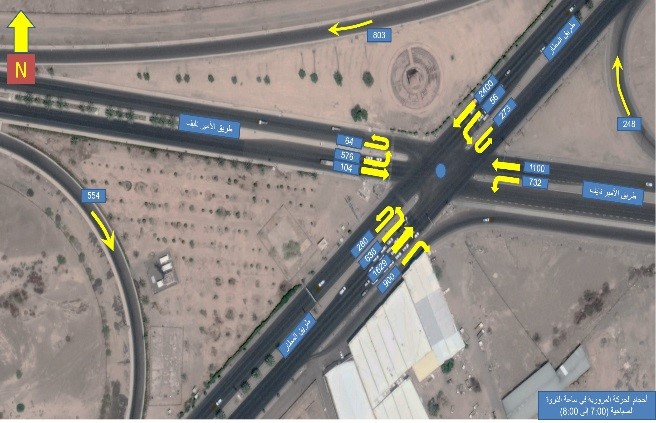
Emergency corridors are essential for reducing the time required for ambulances to navigate congested urban environments. The proposed architecture enables UAVs to identify suitable routes and continuously monitor whether those routes remain accessible.
A coordinated multi-UAV deployment strategy can provide broader traffic visibility and allow emergency-response systems to adapt to congestion as it develops.
This approach can be especially useful in densely populated areas where conventional traffic monitoring infrastructure may not provide complete or sufficiently rapid information.
Performance and Expected Impact
Preliminary modeling indicates that the proposed drone-enabled IoT approach can achieve a potential 30–50% reduction in ambulance response time compared with existing emergency-response systems.
- Faster identification of traffic congestion and road blockages.
- Dynamic route optimization during emergency missions.
- Improved coordination between ambulances, UAVs, and healthcare facilities.
- Reduced exposure of emergency vehicles to unpredictable traffic conditions.
- Potential reduction in mortality caused by delays in receiving emergency medical care.
The system therefore demonstrates the potential of combining artificial intelligence, IoT, UAV technology, and intelligent transportation systems to address real-world healthcare challenges.
Applications
The proposed technology can support several emergency and healthcare applications, particularly in urban environments where traffic congestion presents a significant barrier to medical response.
- Emergency ambulance route optimization.
- Real-time traffic surveillance for emergency services.
- Intelligent emergency corridor creation.
- Disaster and mass-casualty emergency response.
- Remote healthcare and medical supply delivery.
- Real-time coordination between hospitals and emergency vehicles.
Challenges and Limitations
Despite its potential, deployment of drone-enabled emergency healthcare systems introduces several technical, regulatory, and operational challenges.
UAV operations require appropriate airspace management, reliable communication networks, battery management, and safe autonomous navigation. Environmental conditions such as heavy rain, strong winds, and poor visibility can also affect drone performance.
Furthermore, large-scale deployment requires appropriate privacy and cybersecurity mechanisms because drones and IoT systems may process sensitive healthcare, location, and emergency information.
Future Direction
Future implementations can integrate more advanced artificial intelligence models, edge computing, 5G/6G communication, autonomous UAV navigation, and predictive traffic analytics.
AI-driven prediction models could anticipate traffic congestion before it occurs and automatically recommend emergency corridors. Edge computing could further reduce communication latency by processing critical information closer to the drones and emergency vehicles.
Future systems may also incorporate hospital capacity information, patient-condition information, intelligent traffic signals, and autonomous coordination between multiple emergency vehicles.
Conclusion
The proposed Drone-Enabled IoT-Integrated Smart Healthcare System presents an intelligent approach for addressing ambulance delays and improving emergency medical response in congested environments.
By combining UAV-based aerial surveillance, IoT communication, intelligent traffic management, and real-time route optimization, the framework provides a coordinated mechanism for improving emergency transportation.
Preliminary modeling suggests a potential 30–50% reduction in ambulance response time compared with existing systems. With further development and real-world validation, the approach could contribute to faster emergency response, improved patient outcomes, and reduced mortality in critical medical conditions.
Publication
This research appears as Chapter 5 in the CRC Press book Next-Generation Artificial Intelligence: Convergence of Neuroscience, Edge Computing, and Sustainable Technologies .
The book is edited by Manzoor Ansari, Syed Arshad Ali, and Mansaf Alam , with the chapter authored by Dhruv Dhayal, Manzoor Ansari, and Masood Alam .
Published by CRC Press / Taylor & Francis on July 27, 2026 .